
Online Casino Schweiz Legal & Sicher 2024

Unter Spielern stellt sich derzeit immer wieder die Frage, welche Möglichkeiten es gibt ein Online Casino Schweiz legal zu nutzen. Es gab 2019 eine Reform im Geldspielgesetz, seitdem hat sich das Spielangebot auf dem Markt drastisch erweitert. Schweizer Online Casinos und ausländische Betreiber bieten Top Unterhaltung. Doch welches Angebot ist das beste und welche Spielbanken sind überhaupt für Schweizer zulässig? Wie soll man aus den vielen Angeboten im Internet das bestmögliche Online Casino aussuchen? Wir klären hinsichtlich der Gesetzeslage auf. Zudem zeigen wir die absoluten Top Schweizer Online Casinos und geben wichtige Tipps für Ihre Suche.
Hauptthemen des Artikels:
- Legalität und Regulierung von Online-Casinos in der Schweiz
- Beliebte Schweizer Online-Casinos
- Kriterien für die Auswahl eines Casinos und Tipps für Spieler
- Die Zukunft des Online-Glücksspiels
Inhalt
- Übersicht über Online-Casinos und Online-Glücksspiele in der Schweiz
- Das Glücksspielrecht und die Vorschriften in der Schweiz
- Beliebte Schweizer Online Spielbanken
- Die besten Schweizer Online Casinos sortiert nach Kategorien
- Wie finde ich das richtige Schweizer Online Casino?
- Kulturelle Hintergründe zum Glücksspiel in der Schweiz
- Die Auswirkungen von COVID-19 auf das Online-Glücksspiel in der Schweiz
- Die Rolle der Blockchain-Technologie im Online-Glücksspiel
- Die Auswirkungen der Schweizer Bankenregulierung auf das Online-Glücksspiel
- Die Zukunft der Online-Glücksspiele in der Schweiz
Übersicht über Online-Casinos und Online-Glücksspiele in der Schweiz
Die Geschichte der Online-Casino Unterhaltung in der Schweiz ist relativ kurz, da die Regierung erst in den letzten Jahren begonnen hat, die Branche zu regulieren. Bis zum Jahr 2018 war es illegal Online-Glücksspiele in der Schweiz anzubieten, obwohl viele Schweizer Spieler ausländische Websites genutzt haben. Die Regierung hatte erkannt, dass dies zu einem Anstieg von problematischem Spielverhalten und finanziellen Verlusten für die Schweiz geführt hat, und hat deshalb beschlossen, die Branche zu regulieren. Dies sollte Schweizer Spielern mehr Schutz beim Internet- und Online Glücksspiel bieten.
Im Jahr 2019 wurde daher das Geldspielgesetz verabschiedet, das den Betrieb von Schweizer Online-Casino-Etablissements legalisierte. Es gibt jedoch strenge Regulierungen, die von der Eidgenössischen Spielbankenkommission (ESBK) durchgesetzt werden, um sicherzustellen, dass die Betreiber von Online-Casinos ihr Angebot verantwortungsbewusst und im Einklang mit den nationalen Interessen unterhalten.
Unter diesen Regulierungen:
- Müssen Online-Casinos beispielsweise eine Lizenz von der ESBK erhalten und strenge Anforderungen in Bezug auf Spielerschutz, Fairness, Transparenz und Sicherheit erfüllen.
- Die Regierung hat zusätzlich Maßnahmen ergriffen, um problematisches Spielverhalten zu reduzieren, indem sie beispielsweise ein zentrales Register für ausgeschlossene Spieler eingeführt hat.
- Zudem müssten Slots, Spielautomaten und Live Casino Games zertifiziert und regelmäßig geprüft werden.
| Top Casinos | Rating | Bonus | Auszahlungszeit | Einzahlungsmethoden | Spielen | |
|---|---|---|---|---|---|---|
|
1 |

|

5/5 |
€500 + 100 FREE SPINS |

0-24 |








|
|
|
2 |

|
5/5 |
€500 + 150 Free Spins |
0-24 |

|
|
|
3 |

|
4.9/5 |
€6,500 + 180 Free Spins |
0-2 |


|
|
|
4 |

|
4.9/5 |
€120+120 FREE SPINS |
0-24 |


|
|
|
5 |

|
4.9/5 |
4,000 €+ 300 FREE SPINS |
0-24 |
|
|
|
6 |

|
4.8/5 |
100% up to 350 EUR + 100 FS |
0-72 |

|
|
|
7 |

|
4.8/5 |
€100 + 100 Free Spins |
0-24 |
|
Das Glücksspielrecht und die Vorschriften in der Schweiz
Die Neuregulierung des Glücksspiels ist eine der wichtigsten Änderungen für Schweizer Spieler. In diesem Zusammenhang wurde das Onlineglücksspiel in der Schweiz mit dem neuen Geldspielgesetz (BGS) erlaubt. Es wurde 2018 vom Parlament verabschiedet und trat 2019 in Kraft.
Aufsichtsbehörden des Schweizer Online Casinos
Es wurde eine Aufsichtsbehörde eingerichtet, um das Verhalten von Schweizer Online Casinos zu überwachen und die Regeln für Online Glücksspiele festzulegen. In diesem Rahmen ist die Eidgenössische Spielbankenkommission ESBK diese Aufsichtsbehörde, die in vielen Glücksspielangelegenheiten (gemäß Glücksspielgesetz) zuständig ist. Die Online Casino Anbieter arbeiten also unter der Aufsicht der Spielbankenkommission.
Allerdings gibt es für jedes Glücksspiel und je nachdem, ob es sich um ein landbasiertes oder ein Online Casino in der Schweiz handelt, unterschiedliche Regulierungsbehörden.
| Genre | Digital | Land-basiert |
|---|---|---|
| Spielautomaten, Brettspiele(Roulette, Blackjack usw.) | ESBK | ESBK |
| Poker | ESBK | ESBK |
| Bingo | Gespa - Interkantonale Geldspielaufsicht | Gespa - Interkantonale Geldspielaufsicht und kantonale Behörden |
| Wetten | Gespa | Gespa und kantonale Behörden |
| Fantasie-Wetten | - | - |
| Lotterie | Gespa | Gespa und kantonale Behörden |
Voraussetzungen der ESBK für den legalen Betrieb von Schweizer Online Casinos
Die wohl wichtigste Regel der Spielbankenkommission ist, dass ein Onlineglücksspiel Angebot nur diejenigen Spielbanken unterhalten dürfen, die in der Schweiz ein landbasiertes Casino betreiben. Dazu gehören - Stand 2024 - diese Schweizer Spielstätten:
- Casino Baden
- Casino Luzern
- Casino Pfäffikon
- Casino Davos
- Casino Interlaken
- Casino Bern
- Casino Meyrin
- Casino Lugano
- Casino Basel
- Casino Montreux
Neben diesem Kriterium, muss das Online Casino über eine geeignete Betriebsstruktur verfügen, die die Einhaltung der geltenden Gesetze und Vorschriften gewährleistet. Es müssen klare Regeln und Verfahren für den Spielbetrieb, die Auszahlungen, die Buchhaltung und die Überwachung der Aktivitäten des Casinos vorhanden sein.
Online Casinos müssen auch sicherstellen, dass sie über ausreichende finanzielle Mittel verfügen, um seinen Betrieb aufrechtzuerhalten und alle Verpflichtungen gegenüber den Spielern und anderen Parteien zu erfüllen. Es müssen auch Maßnahmen zur Verhinderung von Geld-Wäsche und Terrorismusfinanzierung implementiert werden.
Darüber hinaus muss das Casino strenge Anforderungen in Bezug auf den Spielerschutz erfüllen, einschließlich der Einhaltung von Limits für Einsätze und Verluste sowie der Überwachung von problematischem Spielverhalten. Es müssen auch Maßnahmen zum Schutz der Spielerdaten und zur Gewährleistung der Fairness und Transparenz der Spiele implementiert werden.
Wenn ein Casino ohne Lizenz in der Schweiz operiert, kann es mit schwerwiegenden Strafen und Sanktionenkonfrontiert werden. Dies kann eine Geldstrafe von bis zu 10 Millionen Schweizer Franken oder sogar eine Gefängnisstrafe für die Betreiber des Casinos beinhalten. Darüber hinaus können die Behörden des Landes den Zugang zu nicht lizenzierten Websites blockieren und die Finanzierungsmöglichkeiten einschränken, um illegale Aktivitäten zu bekämpfen.
Online Casino Lizenz Schweiz
Wie erwähnt, muss ein Online Casino eine Schweizer Lizenz haben, um legal zu arbeiten. Die Schweiz betrachtet die vom Land selbst erteilte Lizenz als Voraussetzung für die Online Spielbanken. Aber es gibt auch Lizenzen mit internationaler Gültigkeit. Länder wie Malta, Gibraltar und die Isle of Man stellen diese Lizenzen aus. Diese sind zwar nicht direkt in der Schweiz gültig, haben aber eine Funktion bei der Beurteilung der Seriosität eines Casinos.
Es gibt auch Lizenzen, die von der ESBK an Casinos vergeben werden. Diese Lizenzen sind für landbasierte Casinos gedacht, aber mit dem neuen Geldspielgesetz ist auch eine Lizenz für Casinos vorgesehen, die online tätig sind.
Zwei Hauptaspekte: Konzession A und Konzession B
Die von der Spielbankenkommission gebildeten Konzessionen sind in zwei Hauptaspekte unterteilt. Diese Konzessionen sind aus den Vorschriften für die landbasierten Spielbanken hervorgegangen. In der Schweiz gibt es insgesamt 21 Casinos, die über eine dieser Konzessionen verfügen, davon sind 8 A-Spielbanken und 13 B-Spielbanken.
In Casinos mit B-Lizenz sind die Einsätze begrenzt und der maximale Einsatz beträgt 25 Franken. Darüber hinaus kann der Kanton von den B-Spielbanken eine kantonale Steuer erheben. Die Konzession B bietet also eine begrenztere Lizenz, während die Konzession A sich an größere Kasinos richtet.
Beliebte Schweizer Online Spielbanken
Seit den neuen Vorgaben der Spielbankenkommission für Schweizer Online Casinos, hat sich viel getan auf dem Markt. Die Auswahl an guten Spielstätten für echtes Geld ist massiv gewachsen. Es haben sich unter Schweizer Spielern einige Favoriten herausgebildet. Die besten und beliebtesten unter ihnen stellen wir Ihnen vor:
Swisscasinos - https://online.swisscasinos.ch
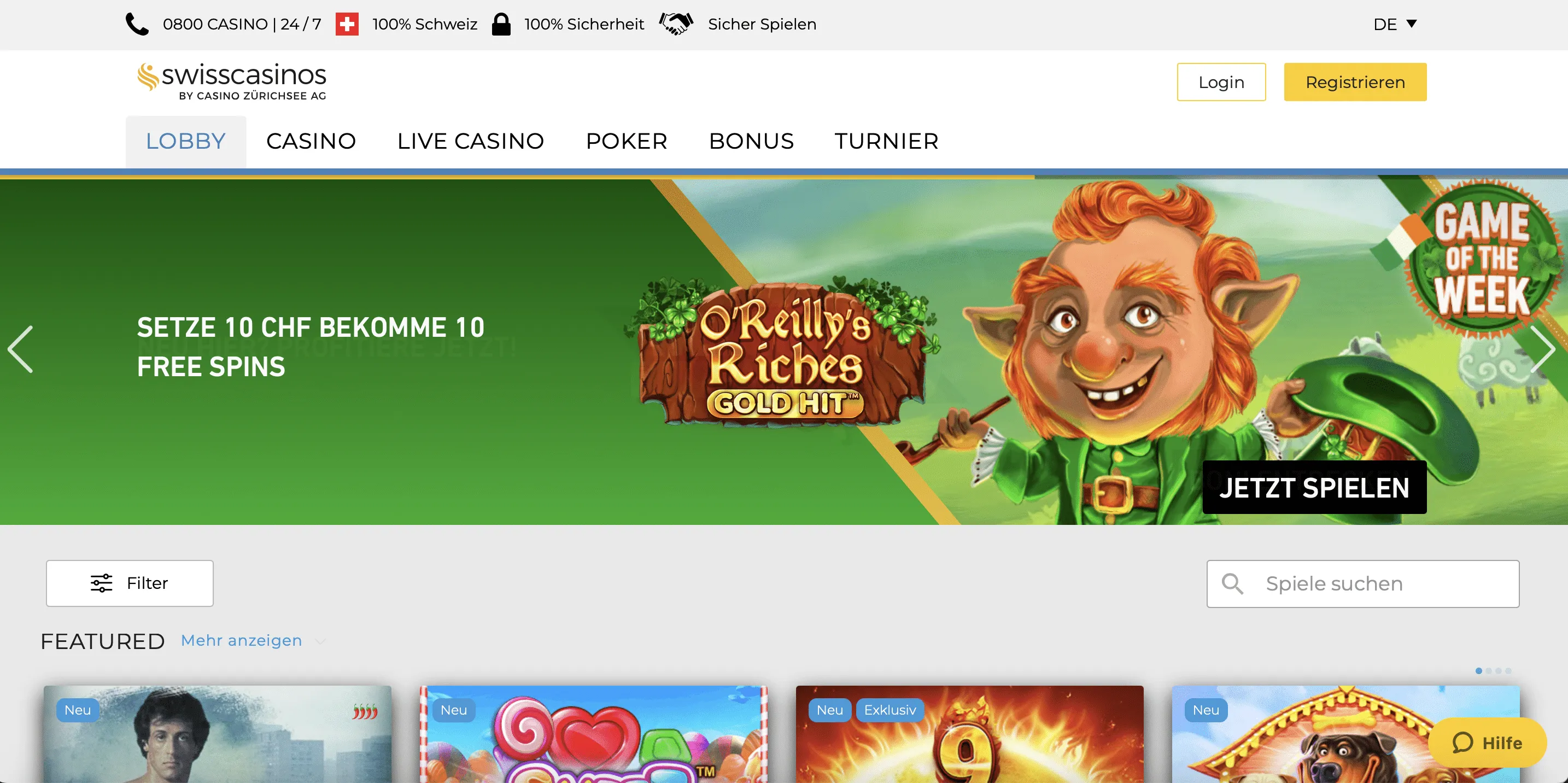
Swisscasinos ist die Firma hinter dem landbasierten Casino Zürich, St. Gallen, Pfäffikon, Bern und Schaffhausen. Zudem sind sie eine der beliebtesten Online-Casino-Plattformen in der Schweiz. Die Unternehmensgruppe hat ihre Lizenzen bereits 2019 bei der Spielbankenkommission erhalten.
Spiele: Swisscasinos bietet eine riesige Spielauswahl, darunter Slots, Spielautomaten, Tischspiele wie Roulette, Blackjack, Baccarat und Poker sowie Live-Dealer-Spiele. Die Plattform arbeitet mit führenden Softwareanbietern wie NetEnt, Microgaming und Evolution Gaming zusammen, um qualitativ hochwertige Games mit ansprechendem Design und reibungsloser Funktionalität anzubieten.
Online Casino Bonus und Promotionen: Es gibt verschiedene Bonusangebote und Promotionen, um Spieler anzuziehen und zu belohnen. Neue Schweizer Spieler können sich für einen Willkommensbonus von bis zu 777 CHF und jede Menge Freispiele registrieren, der auf ihre ersten drei Einzahlungen verteilt ist. Es gibt auch regelmäßige Aktionen wie "Happy Hour" Boni, tägliche Jackpots und Wettbewerbe, bei denen Spieler Preise gewinnen können.
Andere Merkmale: Das Angebot umfasst verschiedene Funktionen, die es von anderen Online-Casinos unterscheiden. Die Plattform verfügt über ein VIP-Programm, das Spielern exklusive Vorteile wie höhere Limits, spezielle Boni und persönliche Betreuung bietet. Es gibt auch ein Live-Casino, das ein authentisches Casino-Erlebnis bietet, da Spieler mit echten Dealern und Spielern interagieren können. Darüber hinaus bietet Swisscasinos eine mobile App für iOS und Android-Geräte an, die ein nahtloses mobiles Spielerlebnis ermöglicht.
Casino777 - https://www.casino777.ch
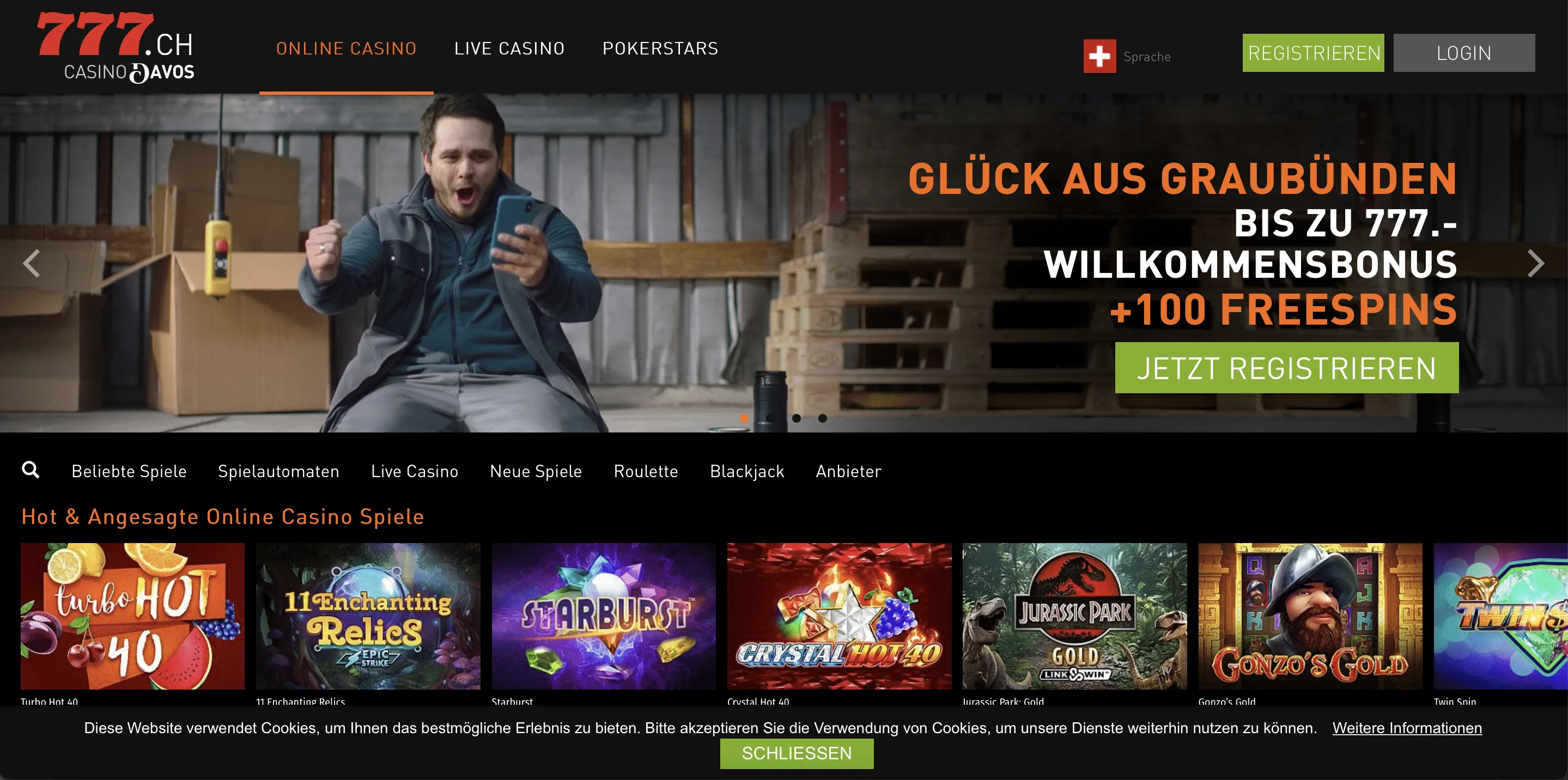
Casino777 ist eine weitere beliebte Online-Casino-Plattform in der Schweiz. Betrieben wird es vom Casino Davos. Ausgestellt hat die Spielbankenkommission die Lizenz im Jahr 2019.
Spiele: Casino777 bietet eine Vielzahl von Slots und Spielautomaten. Hinzu kommen die üblichen Tischspiele, Kartenspiele und ein Livecasino. Die Plattform arbeitet mit führenden Softwareanbietern wie NetEnt, Microgaming und Evolution Gaming zusammen, um eine große Auswahl an qualitativ hochwertigen Spielen für die anspruchsvolle Schweizer Kundschaft zu bieten.
Online Casino Bonus und Promotionen: Casino777 bietet verschiedene Goodies und Promotionen. Neue Spieler können sich für einen Willkommensbonus von bis zu 777 CHF und zahlreiche Freispiele registrieren. Es gibt auch regelmäßige Aktionen wie Freispiele, tägliche Jackpots und saisonale Aktionen wie Adventskalender, bei denen Spieler Preise gewinnen können.
Andere Merkmale: Casino777 bietet auch verschiedene Funktionen, die es von anderen Online-Casinos unterscheiden. Die Plattform verfügt über ein VIP-Programm, das Usern exklusive Vorteile wie höhere Limits, spezielle Bonusoptionen und personalisierten Service bietet.
Es gibt auch ein Livecasino, in dem Spieler mit echten Dealern und anderen Spielern interagieren können. Darüber hinaus bietet Casino777 eine mobile App für iOS und Android-Geräte an, die ein nahtloses mobiles Spielerlebnis ermöglicht.
Jackpots - https://www.jackpots.ch/de/
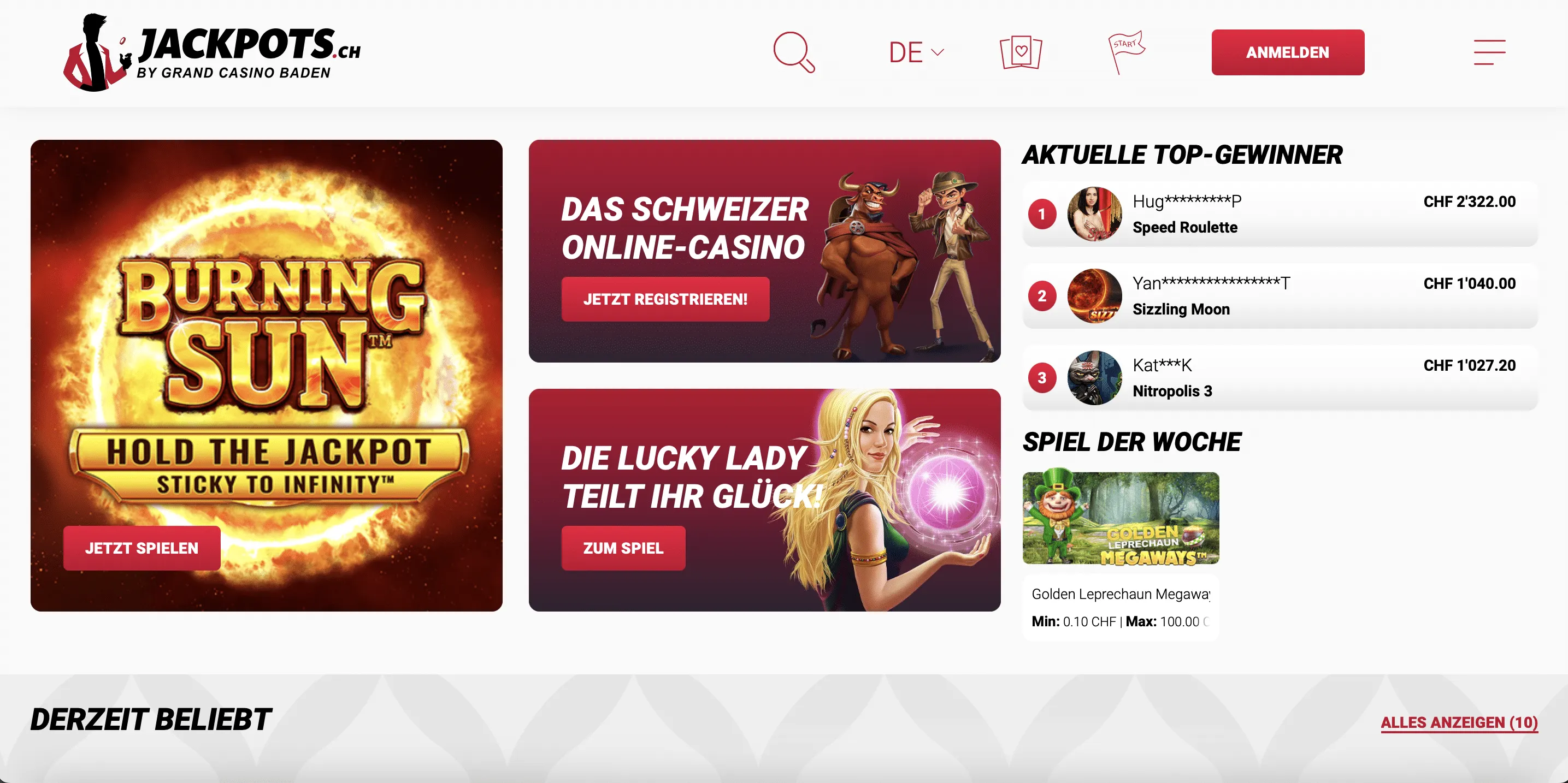
Jackpots.ch ist die Online-Casino-Plattform vom Grand Casino Baden. Die Spielbankenkommission hat die Internet-Lizenz schon 2019 ausgestellt.
Spiele: Jackpots.ch hat unter seinem Dach eine riesige Auswahl an Games. Darunter natürlich Slots und Spielautomaten, Tischspiele wie Roulette, Blackjack, Baccarat und Poker sowie Live-Casino-Spiele. Die Plattform arbeitet mit führenden Softwareanbietern wie NetEnt, Microgaming und Evolution Gaming zusammen, um qualitativ hochwertige Spiele anzubieten.
Online Casino Bonus und Promotionen: Jackpots.ch bietet verschiedene Bonuspakete und Promotionen, um Spieler anzulocken und zu belohnen. Neue Spieler können sich für einen Willkommensbonus von bis zu 1.111 CHF registrieren, der auf ihre ersten drei Einzahlungen verteilt ist. Es gibt zudem regelmäßige Aktionen wie Freispiele, tägliche Jackpots und saisonale Aktionen, bei denen Spieler Preise gewinnen können.
Andere Merkmale: Jackpots.ch bietet verschiedene Wahlmöglichkeiten, die es von anderen Online-Casinos unterscheiden. Die Plattform verfügt über ein VIP-Programm, das Nutzern exklusive Vorteile wie höhere Limits, spezielle Boni und personalisierten Service garantiert.
Der Schutz der Kunden wird sehr ernst genommen. Der Support reagiert schnell und kompetent. Mobile Apps für iOS und Android sind verfügbar.
MyCasino - https://www.mycasino.ch
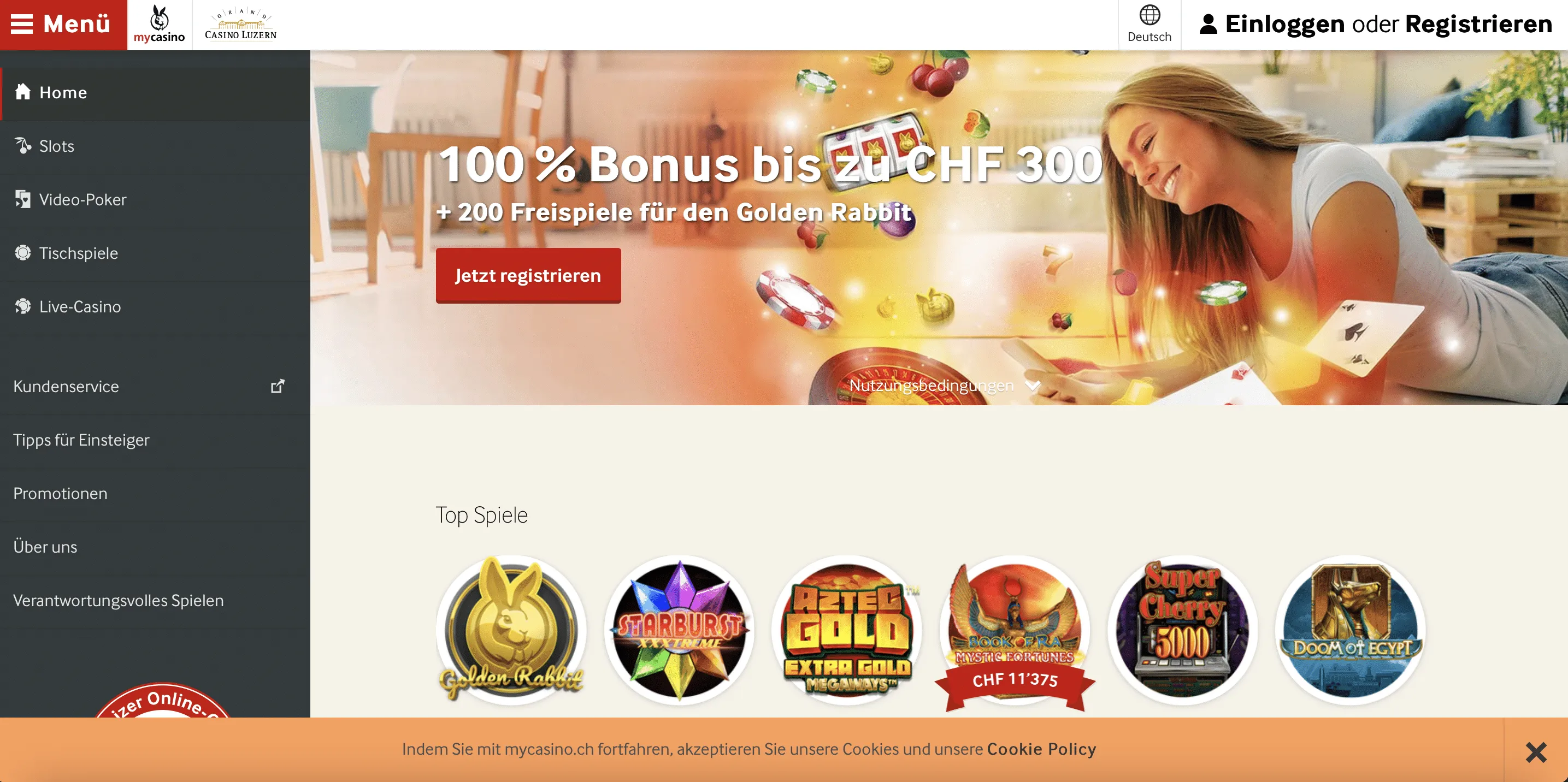
MyCasino ist die Seite vom Casino Luzern. Auch die Lizenz dieses Schweizer Online Casinos wurde schon 2019 von der ESBK ausgestellt, so dass man zu den ältesten am Markt gehört.
Spiele: MyCasino unterhält eine sehr solide Auswahl an Online-Casino-Spiel-Optionen. Darunter unzählige Automaten, Tischspiele, Kartenspiele sowie Live-Casino-Spiele. Die Plattform arbeitet mit führenden GameArt-Experten wie NetEnt, Microgaming und Evolution Gaming zusammen, weil diese bei Schweizer Kunden besonders beliebt sind.
Online Casino Bonus und Promotionen: MyCasino bietet verschiedene Goodies und Promotionen für die heiß umkämpfte Schweizer Kundschaft. Neue Konto-Erstellungen werden für die Registrierung mit einem Willkommensbonus von bis zu 300 CHF belohnt. Es gibt auch regelmäßige Aktionen wie Freispiele, tägliche Jackpots und regelmäßige Aktionen, bei denen Spieler immer wieder Geld-Preise gewinnen können.
Andere Merkmale: Die Plattform verfügt über ein VIP-Programm, das den Nutzern exklusive Vorteile wie etwas höhere Limits, spezielle Boni und personalisierten Service bietet. Es gibt auch ein Livecasino mit echten Dealern und anderen Spielern. Der Kundenservice gilt als seht gut, der Schutz der Spieler ebenfalls als vorbildlich. Es gibt eine mobile App für iOS und Android.
Golden Grand Casino - https://www.goldengrand.ch/de
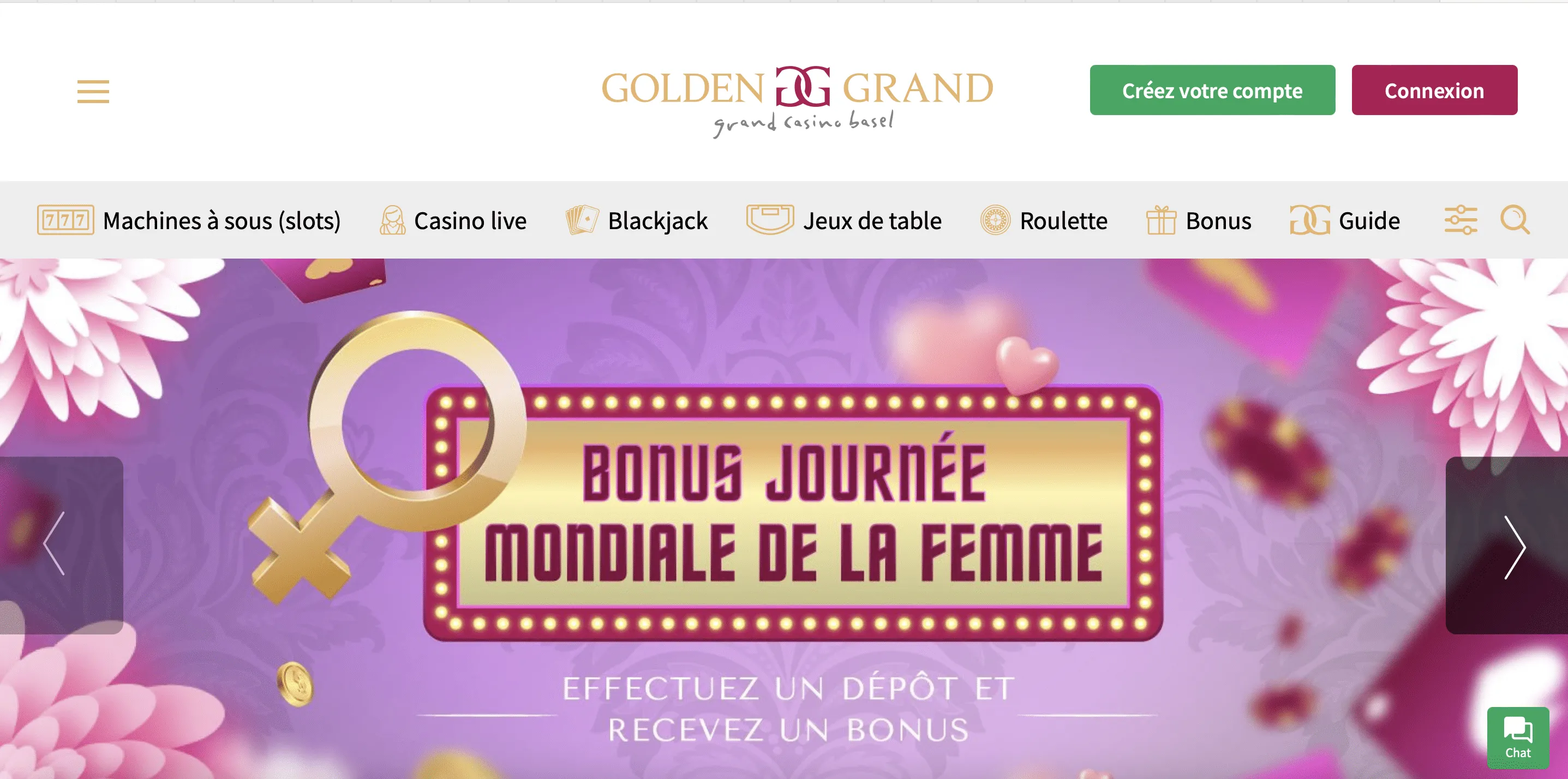
Das Golden Grand ist das Schweizer Online Casino vom Casino Basel. Die Registrierung bei der Spielbankenkommission erfolgte im Jahr 2021.
Spiele: Im Golden Grand finden Schweizer Zocker hunderte von Slots und Automaten. Zudem alle beliebten Tischspiele und sonstigen Klassiker als Live- oder Video-Automaten Version. Man tut hier alles dafür, um immer auf dem Laufenden zu sein. Blockbuster wie Book of Ra sind natürlich im Programm, aber auch die neuesten Kracher und Innovationen der Software Firmen bieten ein optimales Spielerlebnis. Dabei sind: Greentube, Elk, Pragmatic, Microgaming und viele mehr.
Online Casino Bonus und Promotionen: Schweizer online Gamer erhalten direkt 30 CHF für die Registrierung, ohne Einzahlung. Zudem gibt es den Willkommensbonus von 100% - bis zu 300 CHF. Hinzu kommen immer wieder Verlosungen, und sonstige Aktionen, bei denen sich kleine Geschenke oder Freispiele gewinnen lassen.
Andere Merkmale: Die Webseite des Betreibers gilt als besonders gelungen und übersichtlich. Auch der Kundenservice gilt als vorbildlich. Man erfüllt alle gesetzlichen Maßnahmen zum Schutz der Schweizer Kunden. Für die mobile Nutzung werden Apps in iOS und Android bereitgestellt.
Die besten Schweizer Online Casinos sortiert nach Kategorien
| 🏅 Beste Casino Schweiz | Jackpots |
| 🏅 Beste Mobile Casino | Casino 777 |
| 🏅 Beste Casino Auszahlungsquote | Swisscasinoss.ch |
| 🏅 Beste Casino mit CHF | MyCasino |
| 🏅 Beste Live Casino | Golden Grand |
Wie finde ich das richtige Schweizer Online Casino?
Um die richtige Online Spielbank zu finden, sollten die Spieler ihre eigenen Nachforschungen anstellen und die Bewertungen der Casinos beachten. In der Tat ist es einer der Zwecke der Vorbereitung dieses Casino Tests, um Spieler bei der Auswahl des richtigen Casinos zu unterstützen. Aus diesem Grund wird ein Casino in all seinen Aspekten untersucht und es werden Schlussfolgerungen daraus gezogen.
Viele seriöse Glücksspielportale machen nur Casinobewertungen, aber es gibt diejenigen, die wirklich erst Casinos spielen und testen und dann eine Bewertung schreiben und eine Bewertung abgeben, die nur solche Portale nutzen. Zum Beispiel online spielen im legalen Casino über Ecwf casinos, Sie werden immer sicher sein, dass die Wahl, die Sie treffen, sicher und geschützt ist. Ausführlichere Informationen zu den einzelnen Themen finden Sie in den nachstehenden Übershriften.
Bester Schweiz Online Casino Bonus
Bonusangebote sind ein absolutes Top-Kriterium für die Beurteilung der Qualität eines Casinos. Die Angebote für die Schweizer Spieler in den Casinos sollten vielfältig und vorteilhaft sein. Die allerbesten Angebote für Schweizer Spielerinnen und Spieler können Sie in der folgenden Liste einsehen.
- Einzahlungsbonus: Dieser Bonus ist eine der besten Arten. Wenn der Spieler Guthaben im Casino einzahlt, erhält er dafür ein zusätzliches Guthaben. Zum Beispiel kann bei einer Einzahlung von 200 CHF ein Guthaben von +200 CHF mit 100% Einzahlungsbonus erreicht werden.
- Willkommensbonus: Dieser Bonus ist auch am besten für neue Spieler in diesem Genre geeignet. Dieser Bonus wird den Spielern angeboten, wenn eine neue Anmeldung in einem Casino erstellt wird. Wenn dieser Bonus als Beispiel angegeben wird, werden dem neuen Spieler die Angebote bis zu +200% angeboten.
- Treubonus: Casinos belohnen gerne ihre Stammkunden. Aus diesem Grund erhalten Spieler, die verschiedene Leistungen vollbringen, Belohnungen im Gegenzug. Diese können die Freespins oder direkt Guthaben sein.
- Freispiele: Diese Art von Bonus bietet in der Regel kostenloses Online Casino Spielen an Online Spielautomaten. Es ist möglich, diese von anderen Arten von Boni zu erhalten, als auch kann es alle Spieler als Standard zuweisen werden.
Sie sollten in dieser Hinsicht ruhig genau hinsehen, kalkulieren und knallhart sein. Ob ein Angebot vom Casino Interlaken, Luzern oder Zürich stammt, spielt im Web keine Rolle. Dort sollten Sie sich das größtmögliche Paket sichern.
Die besten Casino Spiele in der Schweiz
Seitdem die Online Spielbanken in der Schweiz sehr populär geworden sind, entstehen auch Daten über die Spielauswahl der Spieler. Einige Spiele werden von Schweizer Spielern gerne gespielt. Dies hat zur Folge, dass diese Online Spiele populär werden. In der untenstehenden Liste sehen Sie die beliebtesten Casinospiele, die in der Schweiz gespielt werden.
- Spielautomaten: Starburst (NetEnt), Mega Moolah (Microgaming), Book of Ra (Novomatic), Thunderstruck II (Microgaming), Immortal Romance (Microgaming);
- Poker: Texas Hold 'em, Omaha Hold 'em, Five Card Draw, Video-Poker;
- Roulette: Amerikanisches Roulette, Französisches Roulette;
- Blackjack
- Bakkarat
- Craps
Top Casino Software Anbieter für das Online Casino Schweiz Legal
Schweizer Online Casinos haben beliebte Spiele und es gibt dafür vertrauenswürdige Anbieter, die sie entwickeln. Einige Anbieter sind zuverlässiger geworden, weil die von ihnen entwickelten Spiele flüssig sind und ein angenehmes Spielerlebnis bieten. Einige Entwickler sind sogar Eigentümer vieler Spiele auf dem Markt. Beispiele für diese Anbieter sind NetEnt, Microgaming, Playtech und BetSoft.
Diese Unternehmen haben viele Spiele in den Kategorien Live-Dealer, Sportwetten, Spielautomaten usw. veröffentlicht. Da die Anbieter für das Glücksspiel so wichtig sind, müssen die Schweizer Casinos mit vielen dieser Anbieter verhandeln. So können sie ihren Spielern mehr Spiele anbieten.
Einzahlungen und Auszahlungen in Online Casinos
Einer der Beweise für die Qualität eines Casinos sind die verfügbaren Zahlungsoptionen. Je mehr Zahlungsmethoden das Schweizer Casino anbietet, desto mehr Spieler spricht es an. Außerdem können die Spieler dank der großen Anzahl von Zahlungsmethoden vorteilhaftere Überweisungen tätigen. Die vorteilhaftesten Zahlungsmethoden, die heutzutage in Schweizer Online Casinos verfügbar sein sollten, sind:
- PayPal: Eine der bekanntesten Online-Zahlungsmethoden, die von vielen Online-Casinos in der Schweiz akzeptiert wird. Ermöglicht schnelle und sichere Ein- und Auszahlungen. Es können Gebühren anfallen bei Währungsumrechnungen.
- Skrill: Beliebte E-Wallet-Zahlungsmethode in vielen Online-Casinos. Es bietet schnelle und sichere Transaktionen. Schutz durch Passwörter und besondere Freigabe.
- Handyrechnung: Einige Online-Casinos in der Schweiz bieten die Möglichkeit, Einzahlungen über die Handyrechnung zu tätigen. Dies kann bequem sein, aber es können zusätzliche Gebühren und Einschränkungen gelten.
- ecoPayz: Sichere und zuverlässige E-Wallet-Zahlungsmethode, die in vielen Schweizer Online-Casinos verfügbar ist.
- SOFORT: Schnelle und einfache Zahlungsmethode. Sie ist bankbasiert und ein Produkt der schwedischen Klarna Gruppe.
- Neteller: Beliebte E-Wallet-Zahlungsmethode, die in zahlreichen Online-Casinos möglich ist. Es bietet schnelle und sichere Transaktionen, jedoch können Gebühren anfallen.
- Kryptowährung: Einige Schweizer Online-Casinos akzeptieren Kryptowährungen wie Bitcoin als Zahlungsmethode. Es können Gebühren und hohe Schwankungen des Kryptowährungsmarktes ein Problem darstellen. Zudem erfolgt keine anonyme Zahlung, sondern es erfolgt im Hintergrund eine Umrechnung in CHF.
- Kreditkarte: Visa und Mastercard werden von den meisten Online-Casinos in der Schweiz akzeptiert. Guter Schutz durch PIN und 2-Stufen Genehmigung möglich.
- Banküberweisung: Eine etwas langsame, aber sichere Möglichkeit, Geld auf ein Online-Casino-Konto zu überweisen. Es können jedoch Gebühren und Wartezeiten anfallen.
- Amazon Pay: Eine relativ neue Zahlungsmethode, die mittlerweile von mehr und mehr Schweizer Online-Casinos genutzt wird. Es ermöglicht schnelle und sichere Transaktionen mit dem Amazon Konto.
- SEPA Pay: SEPA Pay ist eine europaweite Zahlungsmethode. Es bietet schnelle und sichere Transaktionen.
- E-Wallet: Allgemein schnelle und sichere Zahlungsmethode. In Schweizer Online Casinos immer gern gesehen. Guter Schutz vor Missbrauch.
Zu den meisten der genannten Methoden lässt sich sagen, dass sie in der Regel für Kunden kostenlos sind. Aus guten Gründen. Firmen, wie das Casino Davos, Casino Interlaken, oder das Casino Luzern sind im Web einer riesigen Konkurrenz ausgesetzt. Normalerweise übernehmen sie deshalb solche Gebühren. Allerdings empfehlen wir vorsichtshalber immer die AGB zu lesen, um böse Überraschungen zu vermeiden.
Mobile Casino-App
Mobile Gaming hat sich in den letzten Jahren sehr stark entwickelt und die Umsätze der Unternehmen steigen. Diese Situation hat sich auch auf die Online Casino Branche ausgewirkt. Daher haben viele Anbieter mobile Spiele herausgebracht und Online Casinos haben ihre Websites mobilfreundlich gestaltet. Aus diesem Grund sind wir der Meinung, dass ein hochwertiges Online Casino auch auf dem Handy spielbar sein sollte. Ein gutes Casino sollte auf allen mobilen Plattformen (Apple (IOS), Android) reibungslos laufen und das Spielerlebnis ohne Probleme weitergehen.
Heutzutage können mobile Casino Spiele in der Regel auf Android-Geräten gespielt werden. Das Online Spielen auf IOS-Geräten ist schwieriger, da Apple es erschwert, Glücksspiel-Apps auf seiner Plattform zu veröffentlichen. Diese Schwierigkeit wird dadurch gelöst, dass die Online Casino Spiele in einem mobilen Browser gespielt werden können. So können sich die Spieler auch mobil bei Online Spielhallen einloggen. Die SSL Verschlüsselung bietet dabei einen stets wirksamen Schutz gegen Datendiebe.
Dienstleistung & Schutz & Sicherheit für die Schweizer Spieler
Eine der Fragen, die Schweizer Spieler am meisten interessiert, ist die Servicequalität von Online Casinos für Schweizer. Ein Casino, das in der Schweiz aktiv ist, muss seinen Kunden einen schnellen und lösungsorientierten Support in deutscher Sprache bieten. Auf diese Weise wird die Lösung eines Problems einfacher und das Vertrauen in das Casino wächst.
Neben dem Kundensupport sollte ein vertrauenswürdiges Schweizer Casino auch andere notwendige Sicherheitsvorkehrungen treffen. Zum Beispiel sollte ein Casino Online Systeme wie SSL und Firewall auf der Website integrieren. Außerdem muss es über eine Lizenz verfügen, die von zuverlässigen Behörden ausgestellt wurde, und sich an die in der Lizenz festgelegten Regeln halten.
Verantwortungsvolles Spielens und sozialer Schutz
Online Casinos haben in den letzten Jahren eine immense Popularität erlangt und bieten eine Vielzahl von Spielen und Gewinnmöglichkeiten. Allerdings ist es wichtig, sich bewusst zu sein, dass Glücksspiel auch Risiken mit sich bringtund daher ein verantwortungsvolles Spielen unabdingbar ist. Aus diesem Grund haben viele Online Casinos Maßnahmen zur Förderung des Spielerschutzes implementiert, wie beispielsweise Limits für Einzahlungen, Verluste und Einsätze sowie die Möglichkeit, sich selbst auszuschließen oder eine Abkühlphase zu beantragen. Auch Aufklärungsarbeit über die Risiken von Glücksspiel und die Optionen zur Unterstützung bei Spielsucht sollten Teil des Angebots sein. Als Spieler ist es wichtig, sich bewusst zu sein, dass Glücksspiel nicht als Einkommensquelle dienen sollte und dass man sich immer im Rahmen seiner finanziellen Möglichkeiten bewegen sollte. Verantwortungsvolles Spielen bedeutet somit nicht, dass man nicht spielen sollte, sondern dass man in Maßen und mit Bedacht spielt.
Tipps für die Auswahl des optimalen Online Casinos
Wenn Sie auf der Suche nach legalen Schweizer Online Casinos sind, dann können Sie gerne die nutzen, die wir vorgestellt haben. Wenn Sie selbst weitere Anbieter testen möchten, dann empfehlen wir es, auf diese Kriterien zu achten:
- Lizenzierung: Stellen Sie sicher, dass das Online-Casino über eine gültige Lizenz verfügt, die von der Schweizerischen Eidgenössischen Spielbankenkommission (ESBK) ausgestellt wurde. Eine Lizenz garantiert, dass das Casino den strengen Regulierungen und Vorschriften der ESBK entspricht.
- Fairness der Spiele: Überprüfen Sie, ob das Casino regelmäßig von unabhängigen Prüfungsbehörden wie eCOGRA oder iTech Labs geprüft wird. Diese Organisationen testen die Spiele auf ihre Fairness und Unvorhersehbarkeit und stellen sicher, dass die Ergebnisse rein zufällig sind.
- Ruf des Casinos: Lesen Sie Bewertungen von anderen Spielern und recherchieren Sie, wie das Casino in der Vergangenheit mit Auszahlungen und Kundenservice umgegangen ist. Ein seriöses Casino wird immer positiv bewertet werden und ein guter Ruf ist ein gutes Zeichen dafür, dass das Casino vertrauenswürdig ist.
- Zahlungsmethoden: Überprüfen Sie, ob das Casino eine breite Palette an sicheren Zahlungsmethoden anbietet. Dazu gehören Kreditkarten, E-Wallets und Banküberweisungen. Stellen Sie sicher, dass Sie eine Zahlungsmethode wählen, die für Sie sicher und bequem ist.
- Spielangebot: Überprüfen Sie, ob das Casino eine große Auswahl an Spielen bietet, die Ihren Vorlieben entsprechen. Dazu gehören Spielautomaten, Tischspiele wie Roulette und Blackjack, sowie Live-Dealer-Spiele. Ein gutes Casino bietet immer eine Vielzahl von Spielen, die für alle Spieler geeignet sind.
- Kundenservice: Überprüfen Sie, ob das Casino einen zuverlässigen Kundenservice bietet, der rund um die Uhr erreichbar ist. Ein guter Kundenservice ist wichtig, um eventuelle Probleme oder Fragen schnell und effektiv zu lösen.
Kulturelle Hintergründe zum Glücksspiel in der Schweiz
Die Schweiz hat eine lange Tradition des Glücksspiels, die bis ins 17. Jahrhundert zurückreicht. In der Schweiz gibt es viele Casinos, die sowohl von Einheimischen als auch von Touristen besucht werden. Das Glücksspiel wird oft als eine Form der niveauvollen Unterhaltung betrachtet und ist ein beliebter Zeitvertreib für viele Schweizerinnen und Schweizer.
Allerdings gab es auch Phasen, in denen das Glücksspiel umstritten war. In den 1920er Jahren wurde es verboten, aber in den 1990er Jahren wieder legalisiert. Seitdem hat die Regierung strenge Regulierungen und Gesetze zum Schutz der Bürger eingeführt, um sicherzustellen, dass das Glücksspiel in der Schweiz sicher und fair bleibt.
Zudem gibt es eine starke Kultur des sozialen Verantwortungsbewusstseins. Die Regierung hat Programme entwickelt, die das Bewusstsein für die Risiken erhöhen sollen. Zum Beispiel gibt es eine nationale Hotline für Glücksspielsucht und viele Casinos haben Selbsthilfegruppen und Beratungsdienste für problematische Spieler.
Die Auswirkungen von COVID-19 auf das Online-Glücksspiel in der Schweiz
Während der COVID-19-Pandemie hat das Online-Glücksspiel in der Schweiz zugenommen, da viele Menschen aufgrund der Einschränkungen vermehrt Zeit zu Hause verbrachten und sich vermehrt dem Online-Glücksspiel zugewandt haben. Die Schließung der landbasierten Casinos verstärkte diesen Trend, da die Spieler auf Online-Casinos umgestiegen sind, um ihre Lieblingsspiele weiterhin spielen zu können. Beliebte Spiele während der Pandemie waren Spielautomaten, Online-Poker und Live-Dealer-Spiele, die den Usern ein interaktives Erlebnis boten.
Die Regierung und die Online-Casinos haben Maßnahmen ergriffen, um sicherzustellen, dass das Glücksspiel verantwortungsbewusst und sicher bleibt, einschließlich der Unterstützung von Kunden mit problematischem Glücksspielverhalten und der verstärkten Überwachung durch Regulierungsbehörden.
Es gibt jedoch Bedenken bezüglich problematischem Verhalten beim Glücksspiel. Experten befürchten, dass der Anstieg der Spieler, die problematisches Verhalten beim Glücksspiel zeigen, zunimmt. Die Branche und die Regierung arbeiten daran, sicherzustellen, dass das Glücksspiel ein verantwortungsbewusstes und sicheres Unterhaltungserlebnis bleibt.
Die Rolle der Blockchain-Technologie im Online-Glücksspiel
Die Schweiz gilt als Zentrum der Blockchain-Technologie, und einige Online-Casinos erforschen den Einsatz von Blockchain, um die Sicherheit und Transparenz des Online-Glücksspiels zu verbessern. Der Einsatz von Blockchain in der Online-Glücksspielbranche kann eine Reihe von Vorteilen bieten, wie z.B. die Erhöhung der Sicherheit und die Verbesserung der Transparenz, da jede Transaktion in einem öffentlichen Ledger aufgezeichnet wird. Darüber hinaus kann Blockchain auch dazu beitragen, Betrug und Manipulation zu reduzieren, indem es schwieriger macht, Transaktionen zu fälschen oder zu ändern.
Allerdings gibt es auch einige Nachteile bei der Verwendung von Blockchain-Technologie im Online-Glücksspiel. Die Implementierung von Blockchain ist möglicherweise teuer und erfordert eine Menge technischer Expertise. Außerdem ist die Technologie noch relativ neu, und es gibt noch keine etablierten Standards oder Regulierungsrahmen für ihre Anwendung.
Ein weiteres Problem bei der Verwendung von Blockchain ist, dass sie möglicherweise nicht vollständig anonym ist, da jeder Nutzer eine öffentliche Identität hat, die in der Blockchain aufgezeichnet wird.
Die Auswirkungen der Schweizer Bankenregulierung auf das Online-Glücksspiel
Die Schweiz ist bekannt für ihre strengen Bankenregulierungen, und diese Vorschriften können einen Einfluss auf die Online-Glücksspielindustrie haben. Online-Casinos müssen sich an die Schweizer Bankvorschriften halten, wenn sie Finanztransaktionen verarbeiten oder Gelder von Spielern akzeptieren möchten. Die Vorschriften zielen darauf ab, illegale Aktivitäten wie Geldwäsche und Finanzbetrug zu verhindern und die Integrität des Finanzsystems zu gewährleisten.
Online-Casinos in der Schweiz müssen sich an die Anti-Geldwäsche-Gesetze halten und strengen Know-Your-Customer-Verfahren (KYC) folgen, um sicherzustellen, dass sie keine illegalen Gelder akzeptieren. Dies kann dazu führen, dass Online-Casinos höhere Kosten haben, um diese Compliance-Anforderungen zu erfüllen.
Die Schweizer Bankregulierungen können auch dazu führen, dass Online-Casinos Schwierigkeiten haben, Bankkonten zu eröffnen oder Transaktionen zu verarbeiten. Einige Banken könnten sich aufgrund des Risikos, das mit dem Online-Glücksspiel verbunden ist, weigern, mit Online-Casinos zusammenzuarbeiten.
Die Zukunft der Online-Glücksspiele in der Schweiz
Es ist wahrscheinlich, dass die Online-Glücksspielindustrie weiter wachsen wird. Eine mögliche Veränderung könnte die Schaffung neuer Regulierungen sein, die speziell auf die Online-Glücksspielindustrie zugeschnitten sind. Man könnte auch den Einsatz neuer Technologien im Online-Glücksspiel wie Blockchain-Technologie und Kryptowährungen fördern.
Ein weiterer möglicher Trend könnte eine Zunahme von Live-Casinos und interaktiven Spielen sein, die eine immersive Erfahrung bieten. Mobiles Spielen wird ebenfalls wahrscheinlich weiterhin an Bedeutung gewinnen und könnte zur Hauptplattform für Online-Glücksspiele werden.
Fazit - Allgemeiner Überblick über die Online Casinos in der Schweiz
Das Casino Luzern, Casino Davos, Casino Interlaken und all die vielen anderen Schweizer Spielbanken haben eine alt-ehrwürdige Tradition. Gut, dass es sie waren, denen der Gesetzgeber und die ESBK erlaubt hat Online Casinos zu eröffnen. Glücksspiele sind in der Schweiz auf höchsten Qualitäts- und Sicherheitsniveau reguliert. Mit dem rigiden Lizenzierungssystem haben Betrüger keine Chance. Gut war es auch, weil sich die Lebensgewohnheiten so verändern, dass Online Gaming und Mobile Casio Apps verstärkt nachgefragt wurden. Somit gibt es viel Abwechslung, großen Spaß und hohen Spielerschutz, wenn Sie ein Online Casino Schweiz legal nutzen.
Casino-Experte

Paul Mönch
Im Glücksspiel seit 2010
Häufig gestellte Fragen
-
Von diesen Casinos, welches Online Casino Schweiz legal und empfehlenswert ist ?
Unter den legalen Online-Casinos können zuverlässige Casinos empfohlen werden. Allerdings sollten auch Angebote, Spieleauswahl und Lizenzierung berücksichtigt werden. Natürlich sollte ein Casino, das bevorzugt werden sollte, so sein, dass das Online Casino Schweiz legal ist.
-
Wer darf auf den Websites der Schweizer Online Casinos spielen?
Jeder kann in Online Casinos in der Schweiz spielen. Dafür gibt es keine Einschränkungen, aber die Spieler müssen bei der Wahl des Casinos vorsichtig sein. Natürlich sollten Menschen mit gesundheitlichen Problemen wie Spielsucht nicht spielen, ohne diese Probleme zu lösen.